Sushi at Sunrise: Why Tokyo's Night Owls All End Up at the Fish Market
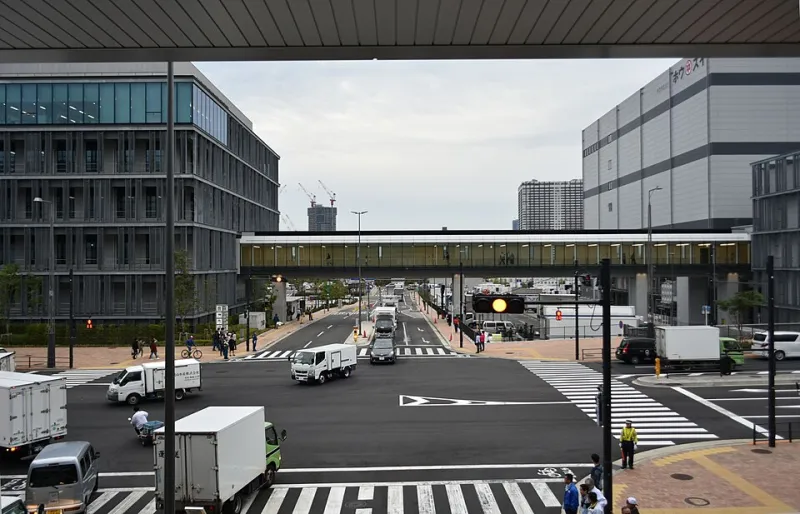
Photo: 江戸村のとくぞう, CC BY-SA 4.0, via Wikimedia Commons
It's 3:40 a.m. in Shinjuku and the lights are coming on at the konbini, which in Tokyo means one thing: the night is technically over. Except it isn't. Not for everyone.
Outside Ni-chome, a bartender I'd been talking to all night stubs out his cigarette and asks if I'm eating. I say sure. He says good, because he knows where the industry goes when the industry closes. Twenty minutes and one very confused taxi ride later, we're standing in the cold outside Toyosu Market, watching forklifts dart between tuna buyers in rubber boots, and he's grinning like a man who's been let in on a secret he gets to share exactly once per visitor.
He's right. It is a secret. And here's yours.
The Night Doesn't End — It Relocates
Tokyo's nightlife industry runs on a skeleton crew that finishes work when yours is just starting. Bartenders clock out at 2 or 3 a.m. Hosts and hostesses roll out at dawn. Ramen slingers, DJ booth regulars, izakaya owners — they all share one communal breakfast tradition, and it isn't Denny's. It's sushi. Raw fish at 5 a.m., eaten shoulder-to-shoulder with the people who've been pouring your drinks all night.
Old Tsukiji was legendary for this. The outer market's tiny diners stayed open through the auction hours, feeding traders and, eventually, the after-hours crowd drifting in from Roppongi and beyond. When the wholesale market moved to Toyosu in 2018, a lot of that culture migrated too — but the spirit survived in the outer stalls and the surrounding blocks, where small counters still fire up before sunrise.
How to Get There When the Trains Don't Run
Here's the practical problem: Toyosu is on the Yurikamome line, which doesn't start running until well after dawn. Your options:
- Taxi from central Tokyo. From Shinjuku or Shibuya, figure 3,000–5,000 yen. Split it with new friends from the bar — this is the standard move.
- Ride the last train partway, then cab it. The Yurikamome's first train leaves Shimbashi around 5:50 a.m. If you can kill time in Shimbashi — not difficult, given the undertrack bars — you can arrive cheap and nearly sober.
- Stay up and walk. Only recommended if your hotel is in the area and your decision-making at 4 a.m. is better than mine.
Aim to arrive between 4:30 and 5:30 a.m. That's when the wholesale floor is humming, the tuna auction viewing deck (check days — it's closed some mornings and requires a reservation for the early slots) is filling up, and the outer market stalls are firing their first pots of rice.
Where the Bleary-Eyed Are Welcome
The market's inner halls are professional territory — you watch, you don't wander. The magic for night-owls is in the outer market and the little restaurants ringing the complex. A few things I've learned the hard way:
- Look for the counters with locals in work boots. If the stools are full of men in rubber aprons, you've found the good one. Point at what they're eating. Order that.
- Daiwa Sushi and Sushi Dai's Toyosu cousins get the tourist lines later in the morning — by going at dawn, you skip the wait entirely.
- The kaisendon (rice bowl) stalls are your friend if raw fish at 5 a.m. feels ambitious. Uni, ikura, hot rice, soy sauce. It's the best hangover prevention money can buy.
- Cash. Some stalls take cards now, but the outer market is still a coins-and-bills neighborhood. Hit an ATM the night before, because the last thing you want at 5 a.m. is a 7-Eleven detour.
Nobody at the counter will blink at your 3 a.m. cologne or the fact that you're wearing last night's shirt. Half the room is too. That's the whole point.
Why It Counts as a Night Out
I know how this sounds — that I'm telling you a fish market is the afterparty. But think about what a great last stop of the night actually is: a room full of people who work when you play, food that requires no decisions, and zero pretense. Toyosu at dawn is all three, plus the best fish you'll eat all trip.
My bartender friend calls it "closing the loop." The night's drinkers feed the market's economy by accident, and the market feeds the restaurants that feed the drinkers. Everybody's shift is somebody else's happy hour.
So here's my challenge for your next Tokyo trip. Pick one night. Stay out past the last train. Don't fight it — lean in. Around 4 a.m., when your friends are texting about bed, get in a taxi and tell the driver Toyosu Market. Order whatever the guy next to you ordered. Eat it as the sky goes pink over the bay.
Then, and only then, go to sleep. You'll have earned it.


