One Night, One Mom-San, Zero Regrets: Falling Into Tokyo's Snack Bar Rabbit Hole
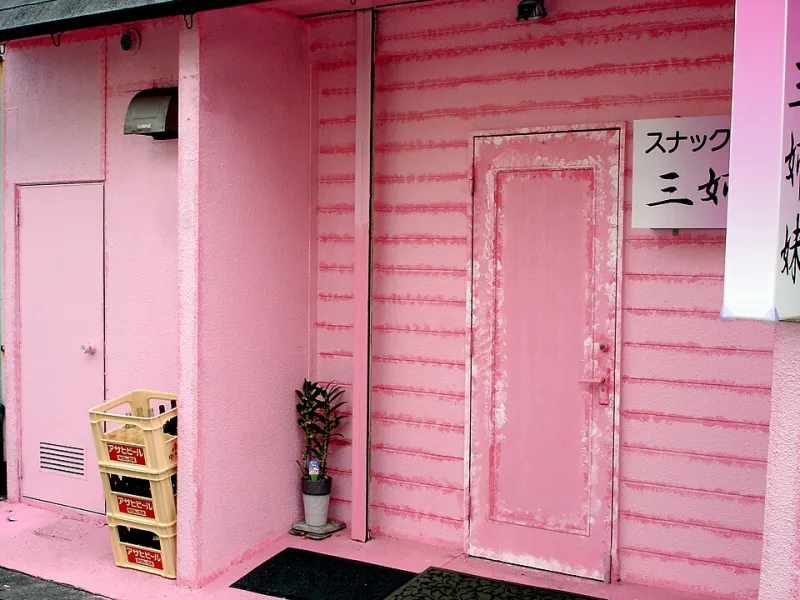
Photo: iMorpheus, CC BY 2.0, via Wikimedia Commons
You've done Golden Gai. You've squeezed into a six-seat bar in Omoide Yokocho and paid tourist prices for the privilege. And yet somehow, the most approachable night out in Tokyo is the one almost no American traveler has heard of.
It's called a snack — or sunakku, if you want to say it right. From the street, it looks like nothing: a frosted-glass door, a hand-painted sign, maybe a plastic basket of silk flowers. Upstairs, usually. Downstairs, sometimes. Inside is a small lounge, a bartender everyone calls mama or mama-san, and a handful of regulars who treat the place like their second living room.
The cover charge might be 500 yen. Maybe 2,000. Either way, it buys you something no Konbini and no Michelin star can: an evening where people will talk to you.
What Actually Happens Inside
A snack runs on a simple economy. You pay a table charge, usually by the hour, and it typically includes a small snack — nuts, dried squid, maybe some pickled something your mom-san insists you try. Drinks are ordered separately, and mixed drinks (whiskey highballs, umeshu on the rocks) are the house language.
Here's the part that surprises people: many snacks run on a bottle keep system. You buy a bottle — often a modest whiskey or shochu — and the bar writes your name on it in marker. It lives on a shelf behind the counter. Come back next month, next year, and your bottle is waiting. You are, in the most literal sense possible, a shareholder in the establishment now.
The mom-san runs everything. She pours, she chats, she teases, she mediates karaoke disputes. Some snacks also have a staff of women (or occasionally men) whose job is to be good company — light your cigarette back when that was legal, laugh at your jokes, drag you into a duet. This is where the American imagination goes straight to hostess clubs and eye-watering tabs. Relax. A snack is the dollar-otter, blue-collar cousin of all that. You're paying for an hour of warmth, not a fantasy.
The Unwritten Rules (Learn Them Before You Learn the Language)
Every snack has its own gravity, but the physics are roughly the same everywhere:
- The mom-san is the law. Greet her first. If she hands you a snack plate, eat it. If she tells you the karaoke order, obey.
- Karaoke has a hierarchy. Regulars go first. Guests go when invited. Do not — I repeat, do not — grab the mic cold. Wait to be called up. When you are, pick something the whole room knows. Sinatra works. So does anything by the Beatles. One guy I met in Ueno brought the house down with "Country Roads" and was fed edamame for free for the rest of the night.
- Pouring is a two-way street. Someone pours for you, you pour for them. Never pour your own drink if there's a mom-san around — that's her job, and she takes it seriously.
- Ask about the charge before you settle in. A quick "one-time fee, ikura?" with a hopeful look will save you any surprise. Most snacks are transparent; a few aren't, and those are the ones to skip.
That's basically it. Snack etiquette is less a rulebook than a vibe: be generous, be curious, don't be the loudest person in a room smaller than your hotel bathroom.
Why This Is the Solo Traveler's Cheat Code
Here's the thing about drinking alone in Tokyo: it's easy, but it's quiet. You can stand at a counter bar and have a lovely silent evening. In a snack, sitting alone is an invitation. The mom-san will interrogate you — kindly, relentlessly — about where you're from, what you do, whether you're married. Your Japanese will be terrible. Her English will be three phrases and pure charisma. Somehow you'll have a two-hour conversation anyway.
For American travelers used to bars where the bartender tolerates you, this flips the script entirely. The bartender is the show. You're not interrupting her night; you're the reason she opened the door.
And the price? A cover charge, a few drinks, maybe a bottle keep if you're feeling committed. Call it 4,000 to 6,000 yen for a full evening — less than a decent dinner in the US, with significantly better storytelling.
Where to Actually Go
Snacks don't advertise. There's no Yelp equivalent that works well here, and the best ones are found by walking and trusting your instincts. But if you want a soft landing for your first night:
Shinjuku — The upper floors around Nishi-Shinjuku and the edges of Kabukicho hold dozens of snacks, some explicitly welcoming to foreigners. Look for English on the menu or a sign — it usually means the mom-san has dealt with travelers before and enjoys it. The area just off the east side, near the Yasukuni-dori side streets, is a good hunting ground.
Ueno — This is old-school Tokyo. Salarymen, aunties, jazz on the stereo, prices that feel like a typo. The alleys around Ameyoko and the streets behind the park hide snacks that have been open since the Showa era and see maybe one foreigner a month. Bring your best karaoke song and your humility.
Golden Gai's periphery — Skip the famous alleys themselves (covered elsewhere on this site) and look one block out. The snacks there offer the same intimacy at a friendlier price.
One warning: a few places in tourist-heavy zones run the classic "bottle scam" — friendly stranger invites you in, you leave with a mystery 30,000 yen bill. The defense is simple: never follow a touter, always confirm the cover charge, and if a menu isn't visible, walk. Real snacks have nothing to hide.
Come Back With Your Name on a Bottle
The best thing about a snack isn't the whiskey or the karaoke or even the mom-san. It's that on your last night in Tokyo, there's a door you can knock on where people know your name — and a bottle with your name on it, waiting on a shelf, for whenever you make it back.
That's not a transaction. That's a regular. And in a city of 37 million people, that might be the rarest thing you can buy for 500 yen.