The Door Test: A Week of Trying to Get Into Tokyo's Most Secretive DJ Bars
Photo: Eva Rinaldi, CC BY-SA 2.0, via Wikimedia Commons
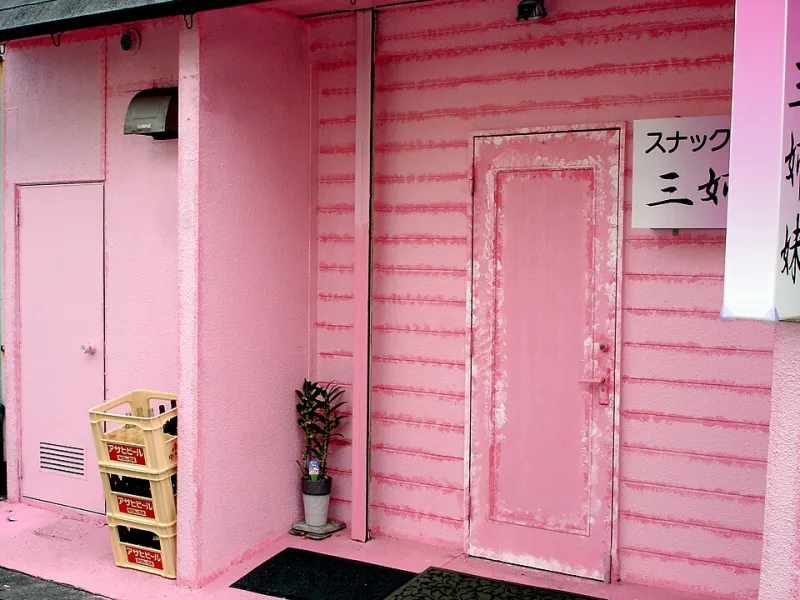
There's a door in Shibuya that doesn't exist. Technically, it's a door — steel, unmarked, wedged between a shuttered dry cleaner and a stairwell that smells like old rain. But according to every map app on earth, it's nothing. According to a Tokyo friend of mine named Kenji, it's the best music room in the city.
"You can't just walk in," he told me, in the tone of a man warning you off a hot stove. "They'll ask you what you've been listening to. If you say the wrong thing, that's it. That's your one chance."
Welcome to the world of Tokyo's spot-betsu bars — roughly, "member's only" joints — where the velvet rope isn't velvet, isn't a rope, and mostly isn't visible at all. In New York, exclusivity is theater: bouncers, guest lists, a guy in a headset deciding your fate based on your shoes. In Tokyo, the gatekeeping is quieter and far stranger. It's a resident DJ who might quiz you on Blue Note deep cuts. It's a regular who has to vouch for you before the master even looks up. It's a room with zero online presence that somehow stays full every night of the week.
I spent seven nights trying to crack three of them. Here's how it went.
Night One: The Rejection
The Shibuya door. Kenji introduced me to the man behind it — older, cardigan, reading glasses pushed up on his forehead like he'd been interrupted mid-crossword. We exchanged bows. He asked, in Japanese, what brought me here.
I made my first mistake: I answered honestly and generically. "I love music. Jazz, hip-hop, a bit of everything."
"A bit of everything" is, apparently, the equivalent of telling a sommelier you like grape juice. He smiled politely, told me the bar was "full tonight," and the door closed with the soft finality of a library book. Kenji winced. "You have to have an answer," he said. "One record you're into right now. Something real."
Lesson one: these doors aren't screening for money or looks. They're screening for sincerity. Faking taste is worse than having none.
Night Three: The Vouch
My second target was a listening bar in a basement near Yurakucho — the kind of place where the turntable sits behind the bartender like an altar and talking above a whisper gets you the look. I didn't go alone this time. Kenji knew a regular, a soft-spoken guy named Watanabe who designs record sleeves and has been drinking there since the nineties.
The dynamic flipped instantly. Watanabe said my name to the master, said I was "serious about records," and just like that I was being waved toward a stool. Nobody quizzed me. Nobody cared that I was visibly foreign and sweating through my shirt. The regular's word was the entire application process.
Inside, the room held maybe fifteen people, all facing the speakers the way Americans face a fireplace. The DJ — the owner — pulled a Herbie Hancock session I'd never heard, and a man next to me wrote the catalog number on a coaster for me without being asked. Nobody spoke for two hours. It was the politest rager I've ever attended.
Lesson two: in spot-betsu culture, you don't get in. You get brought in. The social currency is a person, not a password.
Night Six: The Quiz
Emboldened, I tried a third door in Shinjuku's Nishishinjuku backstreets — a DJ bar rumored to have a collection of rare pressings that makes grown collectors weep. This one did screen me. The resident DJ, a woman in a velour tracksuit with the calm of a chess grandmaster, asked what I'd been listening to lately.
I had my answer ready: a specific 1970s Japanese city pop record I'd genuinely been playing all week. I named it. She raised an eyebrow, asked which track. I told her. Then she asked who played bass on it.
Reader, I do not know who played bass on it. I confessed immediately, hands up, no bluff. She laughed — the first crack in the wall — and said, "Okay. You don't lie. Come in."
Lesson three, and the one that matters most: "I don't know" is a pass. Bullshitting is a permanent fail. These rooms are built by lifetimes of obsessive listening, and the people inside can smell a fraud in one sentence. What they respect is honesty and curiosity.
The Traveler's Playbook
You can't book these bars. You can't find most of them on Google Maps. But if you're coming to Tokyo and want a shot at the underground listening rooms, here's the honest path:
- Start at the semi-public rooms. Tokyo's well-known jazz kissa and vinyl bars are the farm system. Become a familiar face. Talk to the staff. Regulars move between scenes, and a bartender's introduction travels.
- Bring a real answer. One record, one artist, one thing you actually love right now. Specificity is the handshake.
- Never name-drop to impress. Saying you love Coltrane when you've heard one album is a door-closer. Say what you actually spin.
- Let a local carry you in. If a Japanese friend or even a friendly regular offers to bring you, that's the golden ticket. Treat it like one — be quiet, be gracious, buy a round.
- Accept the no. If a door says full tonight, that's the whole conversation. Pushing is the fastest way to become a story they tell about rude foreigners.
Worth the Trouble?
Here's what struck me most by the end of the week. The bars themselves — great sound systems, rare records, cheap whiskey — are wonderful. But they're not the point. The point is that in a city of 37 million people, these rooms survive on nothing but trust. No marketing, no reviews, no algorithm. Just a chain of people, each one vouching for the next, going back decades.
In America, we'd monetize that in a heartbeat. There'd be an app. Tokyo keeps it analog, keeps it human, keeps it behind an unmarked door between a dry cleaner and a stairwell.
I still don't know who played bass on that record. I'm going back Friday to find out.