Four Players, One Ashtray, No English: My Crash Course in Tokyo's Midnight Mahjong Parlors
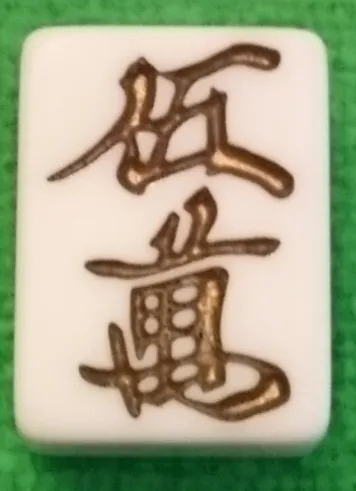
Photo: Vltavit, CC BY-SA 4.0, via Wikimedia Commons
The sign is a single lightbulb and the character 雀, which I cannot read, glowing above a stairwell between a shuttered pharmacy and a vending machine that sells nothing I recognize. My friend Kenji, who has dragged me here on the promise of "a real Tokyo night," points down the stairs and says, in classic understatement: "They probably won't kick you out."
That's the sales pitch. It works.
What Exactly Is a Janso?
A mahjong parlor — janso in Japanese — is a member's-club-that-isn't, a place built entirely around four players, one table, and an auto-shuffler that clatters like a slot machine. The good ones are old. The one Kenji takes me to dates back to the bakuchi gambling era of the postwar decades, when mahjong parlors operated in the same gray zone as pachinko: officially legal, unofficially ruthless, and thick with cigarette smoke you could lean on.
Today the gambling is technically gone, replaced by "tournament points" and a winking fiction everyone agrees to maintain. What survives is the atmosphere — a kind of analog nightlife that has no equivalent in the US. Picture a pool hall crossed with a private card room crossed with your uncle's basement in 1978. Vinyl banquettes. An ashtray the size of a cereal bowl. A tea thermos nobody remembers filling.
The Parlor Mistress Runs Everything
At the counter sits the okami — the parlor mistress — a woman in her seventies with reading glasses on a chain and the posture of someone who has stared down a thousand sore losers. She sizes me up for about four seconds, clocks the tourist, and jerks her chin toward a table where two regulars and a salaryman on his way home are waiting for a fourth.
Here's the thing about mahjong parlors: the mistress doesn't just take your money. She sets the seating, settles disputes, keeps the tea coming, and — in my case — appoints herself my instructor for the evening. Nobody speaks English. This turns out to be irrelevant. Mahjong is a language of gestures, sighs, and the specific way a seventy-year-old woman flicks your wrist when you're about to discard the wrong tile.
The Ten-Minute Rules Primer
You don't need to be good on night one. You need to be not-slow. The basics:
- The goal: Build a winning hand of fourteen tiles — typically four sets of three plus a pair. Sets can be runs or triplets.
- The flow: Draw a tile, discard a tile, into the center. Repeat until someone wins or the wall runs dry.
- Riichi: The signature move. Declare you're one tile away from winning, fold your discard sideways, and pay a small stake. It's the drama button.
- What you'll actually do: Discard randomly for two hours while the table sighs at you.
That last point is real advice. Japanese mahjong (riichi) has a defensive discipline — reading discards, counting visible tiles — that took me the whole night to stop faking. The regulars didn't care. Losing gracefully at mahjong, I learned, is a spectator sport, and everyone at the table was enjoying the show.
Etiquette: The Unwritten Stuff
A few things I got right by accident and one I got wrong on purpose:
- Bring cash and buy in properly. Parlors run on hourly table fees, paid up front, plus whatever "points" you settle at the end. Ask the mistress; she'll set you straight.
- Don't touch other people's tiles. Ever. The discards are arranged in neat rows for a reason — they're the game's public record.
- No photos. This is a semi-private world. Ask before you raise a phone, and accept that the answer is no.
- Smoke is part of the furniture. Many older parlors haven't gone smoke-free. If that's a dealbreaker, look for newer "clean janso" chains.
- Losing money is fine. Complaining about it isn't. The salaryman across from me dropped the equivalent of a nice dinner and laughed about it.
Finding a Table as a Foreigner
Some parlors welcome walk-ins; many are de facto member clubs where a stranger gets the polite freeze. Your best bets: ask your izakaya bartender or snack bar mama for a recommendation (parlors and drinking spots share clientele), look for places with a rate card posted by the door, or try the newer chains in Shinjuku, Ikebukuro, and around JR stations, which are used to first-timers. A few Tokyo parlors now run beginner sets with rental tables and English-friendly staff — search "riichi mahjong Tokyo beginner" and read recent reviews.
But honestly? The old-school place down the unmarked staircase is the one you'll remember. Bring patience, cash, and a willingness to be the night's entertainment.
Why This Counts as Nightlife
We left at 1:30 a.m. My final score was a number I've agreed to never repeat aloud. The mistress patted my arm at the door and said something Kenji translated as: "Next time, less talking, more riichi."
Tokyo's nightlife gets marketed as neon and noise, and fair enough. But the janso is the other half of the city's after-dark DNA — no music, no menu, no English, just four people, a clattering machine, and tiles going click-click-click until the trains start running again. It's the last great analog institution down here, and the door is more open than you'd think.
You just have to take the stairs.