Magnetic Hours: Chasing Tokyo's Cassette Underground Before It Sells Out (Literally)

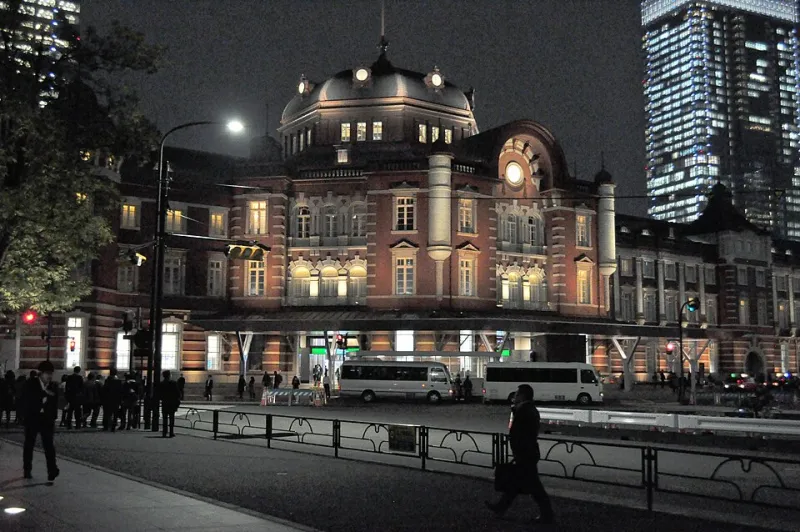
Photo: Rainer Halama, CC BY-SA 4.0, via Wikimedia Commons
There's a moment at every Tokyo tape fair that never fails to crack me up. Some guy in his twenties — tote bag, sensible sneakers, the international uniform of the serious collector — will pull a cassette out of a wooden crate, examine it like a jeweler, and then physically wince when someone else picks up the last copy of the same release. Two thousand yen. Fifteen minutes later, it's gone. There is no repress. There is no Bandcamp restock. That's the whole deal.
If you came up on CDs and streaming like I did, the math here feels upside down. In the US, the cassette revival is mostly nostalgia cosplay — your dad's old tapes, a Taylor Swift merch table, a novelty. In Tokyo, cassettes are something stranger and more alive: a functioning underground distribution network for music that, in many cases, exists nowhere else.
The Scene Runs on a Few Hundred Copies
Start with the economics, because they explain everything. A small Tokyo label — and there are dozens, run out of apartments in Koenji and one-room offices in Nakano — might dub 100 copies of a new ambient EP or noise album. That's not a limitation; that's the point. The artist gets paid upfront or near it, the label risks almost nothing, and the release sells out in days at a handful of shops. Scarcity isn't a marketing gimmick here. It's just what happens when your entire potential audience is people who know which three stores to check on Saturday.
Walk into one of these shops and you'll understand the vibe immediately. No browsing app, no search bar. You dig through crates, you ask the person behind the counter what came in this week, and you take their recommendation seriously, because they're usually the ones pressing the tapes in the first place.
Where to Start Your Hunt
Koenji is ground zero. The neighborhood's maze of secondhand shops and live houses has nurtured Japan's DIY music culture for decades, and a couple of its record stores devote entire walls to new cassette releases — hand-stamped J-cards, photocopied inserts, the whole aesthetic. Ask for "shinpan" (new releases) and watch the counter person disappear into a back room.
Nakano — one stop past Shinjuku on the Chuo line — trades in the same energy at friendlier prices, plus a deeper bench of used tapes if you want to build a collection without going broke.
Shimokitazawa skews more toward used and vintage, but its shops often carry local indie tapes alongside the thrift-store Dylan cassettes.
And then there are the tape fairs — one-day events, usually announced via social media or flyers at the shops above, where a dozen or two labels set up folding tables and sell direct. Think of it as a record fair shrunk down to a single room, everyone speaking the same dialect of humming and rewinding. Bring cash. Bring small bills. Bring a willingness to buy something you've never heard, because half the fun is that you can't stream it first to decide.
Etiquette for the Total Beginner
A few ground rules, learned the gentle way:
- Don't haggle. These are hand-dubbed runs of 80 copies, not a flea market. The price is the price.
- Handle the tapes like they're eggs. Collectors will absolutely notice if you're manhandling J-cards.
- Ask before photographing a whole table. Most people say yes, but it's their livelihood on that folding table.
- Buy something. If a shop owner spends ten minutes talking you through the local ambient scene, walking out empty-handed is a bad look. Even a 1,500-yen tape keeps the ecosystem breathing.
- You'll need a way to play them. Portable players show up in secondhand shops constantly, usually cheap. Or go full convert and get a proper deck — Nakano and Koenji have those too.
Why Here, Why Now
Talking to shop owners and label runners, a pattern emerges. Japan never fully killed physical media the way the US did — CD sales remained healthy long after American towers collapsed, and rental shops persisted into the streaming era. So when young musicians wanted a cheap, tangible format, the cassette wasn't a retro statement. It was just the cheapest physical thing available, and the infrastructure to dub and sell it never went away.
There's also the privacy of it. A cassette release with 100 copies, sold in three shops, generates no algorithm, no playlist placement, no viral moment. The music circulates among people who were in the room. For a certain kind of Tokyo musician — the kind playing a 2 a.m. set in a Koenji basement to eleven people — that's not a failure state. That's the entire dream.
Your Starter Kit
- A player. Secondhand Walkman-style portables run 2,000–6,000 yen; a home deck is more but lasts longer.
- One afternoon in Koenji. Hit at least three shops, buy at least one tape blind.
- Cash in small bills. Many fair vendors don't take cards.
- Follow the labels. Once you buy a tape you like, check the back for the label name and look up what else they've put out. This is how the network reveals itself.
- Low expectations, high openness. Some of these tapes will be unlistenable. One or two will end up being your favorite records of the year, and nobody else on your timeline will have heard them.
The last tape I bought at a fair was by a duo I'd never heard of, in an edition of 70, dubbing a live set recorded in a Suginami apartment. It's already sold out. I've listened to it nine times. Try getting that from an algorithm.